A single economic report can move billions of dollars across global financial markets within minutes. Traders often see sharp price swings after major announcements such as inflation reports, interest rate decisions, or employment data releases.
For example, U.S. Consumer Price Index (CPI) reports regularly trigger increased volatility in stock indexes, Treasury yields, currencies, and even cryptocurrencies as investors adjust their expectations for future Federal Reserve policy.
This is why traders pay close attention to economic calendars. Economic news provides insight into the health of an economy and often influences how investors view growth, inflation, interest rates, and risk. Understanding how economic news affects financial markets can help traders better prepare for volatility and make more informed decisions when major announcements occur.

What Is Economic News?
Economic news refers to reports, data releases, and announcements that provide information about the condition of an economy. These reports help investors, businesses, governments, and central banks understand how economic activity is changing over time.
Unlike company-specific news, which focuses on individual businesses, economic news affects entire sectors, industries, and financial markets. A strong earnings report may influence a single stock, while an inflation report can impact stocks, futures, bonds, currencies, and cryptocurrencies simultaneously.
Economic data is typically released by government agencies, central banks, labor departments, and statistical organizations. In the United States, some of the most closely watched reports come from the Federal Reserve, the Bureau of Labor Statistics, the Bureau of Economic Analysis, and the Census Bureau.
Markets pay attention because economic news often shapes expectations. Investors constantly adjust their outlook based on whether economic conditions appear stronger or weaker than anticipated.
6 Types of Economic News That Move Financial Markets
Economic reports provide valuable insight into economic conditions and investor sentiment. Some reports attract more attention because they can influence interest rates, spending habits, business activity, and market expectations.
Here are six types of economic news that traders follow closely.
1) Inflation Reports
Inflation measures how quickly the prices of goods and services are rising across the economy. Two of the most closely watched inflation indicators are the Consumer Price Index (CPI) and Producer Price Index (PPI).
CPI tracks changes in prices paid by consumers, while PPI measures price changes at the wholesale level before products reach consumers. These reports receive significant attention because inflation directly influences Federal Reserve policy decisions.
Markets often react strongly when inflation comes in above or below expectations. For example, during the inflation surge of 2022, several CPI reports triggered intraday moves of more than 2% in the S&P 500 as investors reassessed future interest rate expectations. Treasury yields and the U.S. dollar also experienced sharp volatility following inflation surprises.
2) Interest Rate Decisions
Interest rate announcements from the Federal Reserve are among the most anticipated events on the economic calendar.
The federal funds rate influences borrowing costs throughout the economy, including mortgages, business loans, credit cards, and savings accounts. Because of this, changes in interest rates can affect everything from consumer spending to stock valuations.
One of the most aggressive tightening cycles in recent history occurred between March 2022 and July 2023, when the Federal Reserve raised interest rates from near 0% to more than 5%. During that period, growth stocks, cryptocurrencies, and other risk-sensitive assets experienced substantial volatility as investors adjusted to higher borrowing costs.
Markets also react to Federal Reserve press conferences and policy statements. In many cases, the comments made after the rate decision create larger price swings than the rate announcement itself because traders are looking for clues about future policy direction.
3) Employment Reports
The Nonfarm Payrolls (NFP) report is one of the most closely watched economic releases in the world. Released on the first Friday of most months, it measures job creation, unemployment levels, and wage growth across the U.S. economy.
A strong labor market often signals healthy economic activity, while weaker employment data may raise concerns about slowing growth. Wage growth is particularly important because rising wages can contribute to inflationary pressure.
Major NFP surprises have historically caused large moves in futures, forex, and bond markets within minutes of release. It is not uncommon for major currency pairs such as EUR/USD to move more than 100 pips following unexpected employment data.
4) GDP Reports
Gross Domestic Product (GDP) measures the total value of goods and services produced within a country. It is widely viewed as one of the broadest indicators of economic health.
GDP growth helps investors understand whether the economy is expanding, slowing, or potentially entering a recession. In the United States, annual GDP growth often falls within a range of approximately 2% to 3% during stable economic periods, although this varies depending on economic conditions.
Negative GDP growth has historically raised recession concerns. During periods of economic contraction, investors often become more defensive as they evaluate the potential impact on corporate earnings and consumer spending.
Although GDP reports may not generate the same immediate volatility as CPI or NFP releases, they play a major role in shaping long-term market expectations and investor confidence.
5) Consumer Spending and Confidence Data
Consumer spending is one of the largest contributors to U.S. economic activity, accounting for roughly two-thirds of GDP in many years.
Because of this, traders closely monitor reports such as Retail Sales and Consumer Confidence Index releases. These reports help measure how willing consumers are to spend money and how they feel about current and future economic conditions.
Strong consumer spending often supports business growth and corporate earnings. Weak spending, on the other hand, may indicate that households are becoming more cautious due to inflation, economic uncertainty, or labor market concerns.
Financial markets frequently use consumer data as an early signal of potential shifts in economic momentum.
6) Geopolitical and Global Events
Military conflicts, trade disputes, sanctions, elections, and disruptions to global supply chains often create uncertainty that influences investor behavior. In some cases, the market reaction can be immediate.
For example, the outbreak of the Russia-Ukraine conflict in 2022 contributed to sharp increases in oil, natural gas, and commodity prices due to concerns about global supply disruptions. More recently, tensions in the Middle East have periodically affected energy markets and broader investor sentiment.
Geopolitical events can also increase demand for assets that investors perceive as safer during uncertain periods, including U.S. Treasury bonds and, in some cases, gold.
How Different Markets Are Affected by Economic News
The table below shows how major asset classes typically respond to economic news and the types of reports traders monitor most closely.
| Market | Economic Reports | Typical Market Reaction |
| Stocks | CPI, Interest Rate Decisions, GDP, Employment Reports, Retail Sales | Strong economic data can support earnings expectations and business growth. Weak data may increase recession concerns. Growth stocks often react more sharply to interest rate changes than defensive sectors. |
| Index Futures | CPI, Nonfarm Payrolls (NFP), Federal Reserve Announcements, GDP | Often experience rapid price swings immediately after major releases. Futures markets frequently react before cash markets open, making them highly sensitive to economic surprises. |
| Forex | Interest Rate Decisions, CPI, Employment Data, Central Bank Statements | Currency values often move based on changes in interest rate expectations. Strong economic data can strengthen a currency, while weaker data may reduce demand. |
| Bonds | CPI, Interest Rates, Employment Reports, GDP | Bond yields typically rise when inflation expectations increase and fall when investors seek safety. Treasury markets often react quickly to inflation and Federal Reserve policy changes. |
| Commodities | Inflation Reports, GDP, Energy Data, Geopolitical Events | Economic growth can increase demand for commodities such as oil, copper, and natural gas. Geopolitical events may create supply concerns that lead to higher prices. |
| Crypto | CPI, Interest Rates, Employment Data, Geopolitical Events | Often reacts through changes in investor risk appetite. Higher interest rates can pressure risk assets, while improving market sentiment may support cryptocurrency demand. |
How Traders Use Economic News In Trading Strategies
Economic reports do not tell traders exactly where prices will go next. However, they can provide valuable insight into market conditions, potential volatility, and changes in investor expectations.
Here are 4 common ways traders use economic news to make more informed decisions.
1) Following an Economic Calendar
Most active traders begin each week by reviewing an economic calendar. These calendars list upcoming reports, release times, forecasted figures, and previous results.
Major events such as CPI reports, Federal Reserve meetings, and Nonfarm Payrolls (NFP) releases are often marked as high-impact because they have a history of creating large market moves. For example, NFP reports are released only once per month but can trigger significant volatility across stock index futures, forex pairs, Treasury yields, and cryptocurrencies within minutes.
Popular economic calendars are available through platforms such as Forex Factory, Trading Economics, and Investing.com. Many traders use these tools to identify periods when volatility is likely to increase.
2) Adjusting Risk Before News Releases
Economic news can create sharp market reactions, especially when reported data differs significantly. Because of this, many traders reduce exposure before major announcements. Some lower position sizes, while others avoid opening new trades until after the report has been released.
This approach is particularly common among futures traders because economic releases can trigger rapid price movement. During major CPI or Federal Reserve announcements, stock index futures may move dozens of points within minutes as traders react to new information.
Risk management becomes even more important during these periods because volatility can increase slippage, widen spreads, and trigger stop losses more easily than normal market conditions.
3) Comparing Expectations to Actual Results
Before major economic reports are released, economists publish forecasts known as consensus estimates. Financial markets typically price in these expectations ahead of time.
For example, if analysts expect inflation to rise by 3.0% and the actual figure comes in at 3.8%, the market may react strongly because the result was higher than anticipated. The surprise matters more than the number alone.
This is why traders often focus on three figures:
| Data Point | Why It Matters |
| Previous Reading | Shows how conditions have changed over time |
| Forecast | Reflects market expectations before the release |
| Actual Result | Determines whether the report exceeded or missed expectations |
4) Waiting for Price Confirmation
The first few minutes following a major announcement can be highly unpredictable. Markets often experience rapid swings as traders, institutions, and algorithms process new information.
For example, during major Federal Reserve announcements, markets sometimes move sharply in one direction before reversing minutes later as participants reassess the details of the report or press conference.
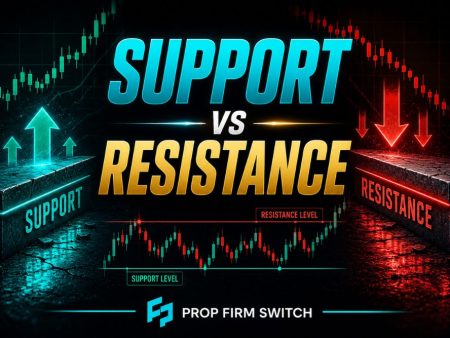
Instead of entering trades immediately, many traders wait for price action to stabilize and look for confirmation through support and resistance levels, trend direction, volume, or market structure.
This approach may reduce the risk of getting caught in emotional reactions and help traders make decisions based on market behavior rather than headlines alone.
Markets Move on News
Economic news plays a major role in how financial markets behave. Reports on inflation, interest rates, employment, economic growth, and consumer spending help investors evaluate the strength of an economy and adjust their expectations for the future. Even when the data itself is not surprising, the market’s reaction can create opportunities and risks for traders.
Understanding how different types of economic news affect stocks, futures, forex, bonds, commodities, and cryptocurrencies can provide valuable market context. It also helps traders prepare for periods of increased volatility rather than reacting emotionally when prices move quickly.
While no economic report can predict market direction with certainty, staying informed about major announcements can improve decision-making and risk management. Traders who understand what the market is watching are often better prepared to navigate changing conditions and respond to new information as it becomes available.