Prop firm challenges have become one of the most popular gateways for traders looking to access large amounts of trading capital. While demand continues to grow, estimates suggest that around 80 – 90% of traders do not pass a prop firm challenge on their first attempt. This often leads many to believe that the challenges are “too difficult” or stacked against traders.
In reality, most traders don’t fail because they lack trading skill, they fail because they lack structure, discipline, and preparation.
A prop firm challenge is not designed to test how fast you can make money. It’s designed to evaluate how well you manage risk, follow rules, and stay consistent under pressure. When approached correctly, passing a challenge becomes far more achievable than most traders expect.
This guide breaks down the entire process step by step, helping you understand what prop firms look for and how you can align your trading approach with those expectations. Whether you’re new to prop trading or attempting another challenge, the goal here is simple: give you a clear, realistic roadmap to getting funded.

What Is a Prop Firm Challenge?
A prop firm challenge is an evaluation process used by proprietary trading firms to assess whether a trader is ready to manage firm capital. Instead of depositing large personal funds, traders pay a relatively small fee to attempt a challenge under predefined rules.
While the accounts are typically simulated during the challenge phase, the goal is to demonstrate professional-level trading behavior. Traders who pass are rewarded with access to a funded account and a profit-sharing arrangement.
In short, prop firm challenges are less about aggressive returns and more about proving you can trade responsibly.
Common Reasons Why Traders Struggle With Prop Firm Challenges
Many traders enter a prop firm challenge confident in their strategy, only to see their accounts fail unexpectedly. This usually isn’t due to one big mistake, but a series of small, avoidable issues.
Some of the most common reasons traders struggle include:
- Misunderstanding drawdown rules
Many traders focus heavily on profit targets while underestimating how strict daily and maximum drawdown limits can be. - Overtrading due to pressure
The desire to pass quickly often leads traders to take low-quality setups they would normally avoid. - Inconsistent risk management
Risking too much on a single trade can wipe out days or weeks of progress. - Changing strategies mid-challenge
Switching approaches after a few losses usually creates inconsistency rather than improvement. - Treating the challenge differently from a real account
When traders trade more aggressively simply because the account is “evaluation-based,” discipline breaks down.
Understanding these challenges early helps you avoid them altogether, and that’s exactly what the next sections are designed to do.
Step 1: Understand the Prop Firm’s Rules and Objectives
Before placing your first trade, it’s essential to understand how a prop firm evaluates traders. Most challenge failures do not come from bad entries or poor strategies, but from misunderstandings around rules and objectives.
Approaching the rules as a framework rather than a limitation allows you to trade with confidence and clarity throughout the challenge.
Understand the Profit Target and Evaluation Structure
Every prop firm challenge is built around a predefined profit objective. This target is not meant to be reached as quickly as possible, but within the boundaries of controlled risk and consistency. Some challenges include time limits, while others allow unlimited duration, which can significantly affect how you plan trades and manage pressure.
Know the Difference Between Daily and Maximum Drawdown
Daily drawdown limits typically reset every trading day, while maximum drawdown represents the total allowable loss across the entire challenge.
Failing to distinguish between the two can lead to unexpected account violations, even if the overall account balance appears healthy. Successful traders constantly track drawdown levels and adjust risk accordingly, especially after a losing trade or volatile session.
Be Aware of Trading Restrictions and Conditions
Prop firms often apply specific trading conditions to reduce excessive risk. These may include restrictions on trading during high-impact news events, holding positions over weekends, or using certain instruments.
Understanding when you are allowed or not allowed to trade helps prevent accidental rule breaches.
Review Leverage, Lot Size, and Instrument Limitations
Leverage and position sizing rules play a major role in how much risk you can take per trade. Some prop firms impose limits on lot sizes or restrict certain instruments based on volatility or liquidity.
Reviewing these limitations in advance ensures your position sizing aligns with both your risk management plan and the firm’s requirements.
Align Your Trading Strategy With the Firm’s Objectives
Once the rules are clear, the final step is aligning your trading strategy with the firm’s objectives. Prop firms prioritize consistency, risk control, and discipline over aggressive returns.
When your strategy respects drawdown limits, trading conditions, and evaluation structure, you eliminate guesswork and emotional stress. This alignment allows you to focus entirely on execution, one of the key traits prop firms look for in funded traders.
Step 2: Choose a Trading Strategy That Fits the Challenge Rules
A trading strategy that performs well on a personal account may not always be suitable for a prop firm challenge. Prop firm evaluations place strict limits on drawdown, risk exposure, and consistency, which means the strategy you choose must align with these constraints, not fight against them.
The most effective strategies for prop firm challenges are typically simple, rule-compliant, and repeatable. Rather than trying to maximize returns, the focus should be on minimizing mistakes and maintaining steady performance throughout the evaluation period.
Focus on Rule-Friendly and Low-Drawdown Strategies
Prop firms prioritize capital preservation and controlled risk. Strategies that rely on large position sizes, aggressive martingale techniques, or wide drawdowns often struggle to survive challenge conditions.
A suitable challenge strategy should be able to perform without deep equity swings and should allow you to stay comfortably within daily and maximum drawdown limits.
Match the Strategy to Your Trading Style and Schedule
Your strategy should fit not only the challenge rules, but also your lifestyle and personality. A trader with limited screen time may struggle with fast-paced scalping, while someone who enjoys active decision-making may lose patience with longer-term swing trades.
Avoid Over-Optimization and Strategy Hopping
During a prop firm challenge, consistency matters far more than complexity. Frequently changing strategies after a few losses often leads to emotional trading and rule violations.
Common Trading Strategies Used in Prop Firm Challenges
Below is a general overview of commonly used trading strategies and what they are best suited for during prop firm challenges:
| Trading Strategy | Best For | Key Advantages | Potential Challenges |
| Day Trading | Traders who can monitor markets during sessions | Balanced risk, clear daily structure, avoids overnight risk | Requires discipline to avoid overtrading |
| Swing Trading | Traders with limited screen time | Fewer trades, lower emotional pressure | May be affected by news or overnight gaps |
| Scalping | Highly experienced, fast decision-makers | Quick results, minimal overnight exposure | Tight drawdown limits, execution errors |
| Trend Following | Traders who prefer directional moves | Clear bias, fewer trades | Can struggle in ranging markets |
| Session-Based Trading | Traders who focus on specific market sessions | Predictable volatility, structured timing | Requires patience outside active sessions |
Step 3: Set Realistic and Achievable Profit Goals
One of the biggest mistakes traders make is focusing solely on the final profit target. This often leads to rushed decisions and unnecessary risk.
Prop firms reward discipline and consistency. Traders who prioritize steady progress are far more likely to reach the finish line without violating drawdown rules.
Step 4: Apply Professional Risk Management From Day One
Risk management is the backbone of every successful prop firm challenge. Even a strong strategy can fail if risk is not controlled properly.
Professional traders typically:
- Risk a small percentage per trade
- Maintain consistent position sizing
- Avoid increasing risk after losses
The primary goal during a challenge is not maximizing profits, it’s protecting capital. When risk is managed correctly, profitability becomes a natural byproduct.
Step 5: Develop the Right Trading Psychology
Trading psychology plays a major role in whether a challenge is passed or failed. Emotional decisions often lead to overtrading, revenge trading, or abandoning a proven strategy.
To maintain psychological stability:
- Accept losses as part of the process
- Avoid emotional reactions after wins or losses
- Stay patient during slow or unclear market conditions
Treating the challenge like a real funded account helps reinforce discipline and keeps emotions in check.
Step 6: Adapt to Changing Market Conditions
Financial markets are constantly shifting. A strategy that performs well in one environment may struggle in another, which is why adaptability is a key trait prop firms look for in traders.
Understanding market behavior helps you avoid unnecessary losses and remain consistent throughout the challenge.
Recognize the Main Market Conditions
Markets generally move through different phases, and identifying the current environment allows you to trade more effectively.
Trending Markets
Trending markets are characterized by clear directional movement, either upward or downward. These conditions often favor trend-following and breakout strategies, as price tends to respect structure and momentum.
Ranging Markets
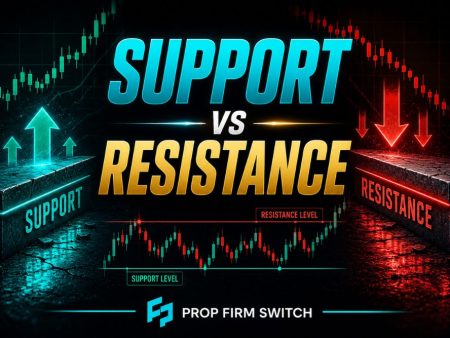
Ranging markets occur when price moves sideways between support and resistance levels. Mean-reversion and range-based strategies often perform better in these conditions, while breakout strategies may generate false signals.
Choppy or Low-Quality Markets
Choppy markets lack clear direction and often produce erratic price movements. These conditions can increase emotional trading and lead to overtrading. Reducing trade frequency or staying on the sidelines is often the most effective approach.
Understand Volatility and Its Impact on Risk
Volatility plays a major role in how markets behave. High volatility can create opportunity but also increases risk, while low volatility may reduce trading opportunities altogether.
During periods of higher volatility, successful traders often:
- Reduce position size to stay within drawdown limits
- Widen stops slightly to account for price swings
- Become more selective with trade entries
During low-volatility environments, patience becomes essential, as forcing trades often leads to unnecessary losses.
Adjust Trade Frequency Based on Market Quality
Not every trading day offers high-quality setups. When markets are unclear or conditions don’t align with your strategy, trading less can be more profitable than trading more.
Know When Not to Trade
One of the most underrated skills in prop firm trading is knowing when to step aside. News-heavy sessions, unpredictable price behavior, or emotional fatigue are all valid reasons to avoid trading.
Staying out of the market during poor conditions is not a missed opportunity, it is a strategic decision that protects your account and improves long-term consistency.
Step 7: Use Trading Tools and Technology Efficiently
Modern trading tools can significantly improve execution, consistency, and discipline when used correctly. However, successful traders understand that technology is meant to support decision-making, not replace it.
When used responsibly, technology becomes a powerful ally in maintaining consistency throughout the evaluation process.
Risk Calculators and Risk Management Automation
Accurate position sizing is critical in a prop firm environment where drawdown limits are strict. Risk calculators help traders determine appropriate lot sizes based on predefined risk parameters.
These tools reduce the likelihood of human error and help enforce discipline, especially during volatile market conditions.
Economic Calendars and Market Alerts
Economic calendars and real-time alerts help traders stay aware of high-impact events that may affect volatility. This is particularly important for prop firm challenges that impose restrictions around news trading.
Awareness of market events helps prevent unexpected drawdowns and rule violations.
Charting and Data Analysis Tools
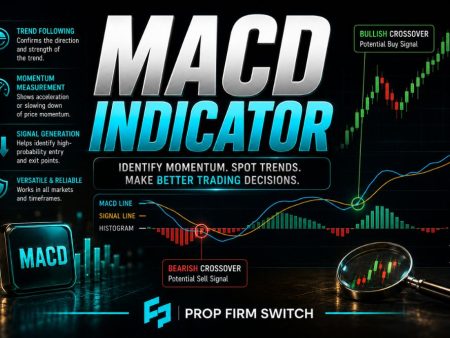
Advanced charting and analysis tools help traders visualize price action more clearly and make informed decisions. Features such as multi-timeframe analysis, indicators, and custom layouts improve efficiency and reduce guesswork.
Data analysis tools also allow traders to:
- Identify recurring market patterns
- Evaluate strategy performance statistically
- Refine execution without changing strategy
AI and Algorithmic Trading Assistance
Artificial intelligence and algorithmic tools are increasingly being used to assist traders, not to automate decisions entirely, but to enhance consistency and efficiency.
These tools can help remove emotional bias and improve decision-making, provided they are used within the prop firm’s rules and guidelines.
Platform Features That Enhance Execution
Most modern trading platforms offer built-in features designed to improve execution quality. These may include:
- One-click trading
- Order templates
- Risk overlays and exposure tracking
Familiarity with your platform’s features reduces execution errors and ensures smoother trade management during fast-moving markets.
Best Tips to Improve Your Chances of Passing a Prop Firm Challenge
Passing a prop firm challenge goes beyond following rules and hitting profit targets. It’s about building habits that support consistency, discipline, and long-term growth. Traders who eventually get funded often treat each challenge as a learning process rather than a one-time test.
Learn From Mistakes and Review Your Trades
Every trade provides feedback, whether it ends in profit or loss. Instead of focusing only on results, experienced traders focus on execution quality and decision-making.
Reviewing trades regularly helps identify recurring patterns that may be holding performance back, such as emotional entries or inconsistent risk.
This review process allows traders to:
- Recognize emotional or behavioral mistakes early
- Identify strengths worth repeating
- Make small, controlled improvements without changing strategies
Over time, these adjustments lead to more consistent execution and better challenge outcomes.
Find a Support Network or Trading Community
Trading during a prop firm challenge can be mentally demanding, especially when done in isolation. Having access to a strong support network provides perspective, accountability, and encouragement during challenging periods.
Finding a mentor or joining a well-aligned trading community can accelerate learning and reinforce professional habits. Surrounding yourself with traders who value process, risk management, and long-term consistency over hype can make a meaningful difference in overall performance.
Plan for Long-Term Success Beyond the Challenge
Passing the challenge should not be viewed as the final goal. Traders who think long-term tend to perform better during the evaluation itself because they prioritize sustainability over speed.
This mindset naturally aligns with what prop firms look for in funded traders.
Manage Expectations and Stay Patient
Many traders fail challenges simply because they rush the process. Progress can feel slow at times, but patience often leads to better decision-making and fewer rule violations.
Patience is not passive, it’s a strategic advantage.
Stay Educated and Commit to Continuous Improvement
Markets evolve, and successful traders evolve with them. Continuous improvement doesn’t mean constantly changing strategies, but refining execution, discipline, and understanding of market behavior.
This commitment often includes:
- Studying market structure and price behavior
- Improving risk management techniques
- Reviewing performance metrics over time
Small improvements, applied consistently, compound into meaningful long-term results.
Conclusion
Passing a prop firm challenge is not about luck or aggressive trading, it’s about process, discipline, and consistency.
While many traders struggle initially, those who focus on risk management, psychology, and adaptability significantly improve their chances of success. Whether you pass on your first attempt or learn through experience, each challenge helps refine the skills needed to trade professionally.
With the right mindset and structure, passing a prop firm challenge becomes not just possible, but repeatable.