The foreign exchange market offers exciting opportunities for traders worldwide, but navigating this complex landscape can be challenging for newcomers.
Finding the right forex strategies for beginners can significantly shorten your learning curve in the currency markets and help you avoid costly mistakes.
With over $6.6 trillion traded daily in the forex market, having a structured approach is essential for success. This guide explores proven forex trading strategies specifically designed for beginners, focusing on simplicity, effectiveness, and risk management.
Whether you’re just starting your trading journey or looking to refine your approach, these strategies will provide a solid foundation for your forex trading endeavors.

Forex Trading for Beginners: Understanding the Basics
Before diving into specific strategies, it’s crucial to grasp the fundamentals of forex trading. Forex trading for beginners can initially seem overwhelming, but starting with the right approach makes all the difference.
The forex market involves buying one currency while simultaneously selling another. These currency pairs are quoted regarding how much of the quote currency (second currency) is needed to purchase one unit of the base currency (first currency).
For example, if EUR/USD is quoted at 1.2000, it means 1 Euro can be exchanged for 1.20 US Dollars.
Key forex concepts beginners should understand include:
| Concept | Description | Why It’s Important |
|---|---|---|
| Pips | The smallest price movement in a currency pair | Used to calculate profit and loss |
| Lot Size | The transaction size (standard, mini, micro) | Determines position exposure |
| Leverage | Borrowed capital to increase trading position size | Amplifies both gains and losses |
| Spread | Difference between bid and ask price | Represents transaction cost |
| Margin | Collateral required to open a leveraged position | Affects risk management |
A structured approach to forex trading for beginners should include practice on demo accounts before risking real money. This allows you to test strategies and gain confidence without financial consequences.
What Makes a Good Beginner Forex Strategy?
When evaluating forex strategies for beginners, look for approaches that don’t require constant market monitoring and have these essential qualities:
- Simplicity: The strategy should be easy to understand and implement without complex indicators or calculations.
- Clear Rules: Well-defined entry and exit points with minimal subjective interpretation.
- Risk Management: Built-in rules for position sizing and stop-loss placement.
- Time Efficiency: Doesn’t require constant monitoring of charts or multiple timeframes.
- Proven Track Record: Has demonstrated effectiveness over time across different market conditions.
The best forex strategies for beginners focus on simplicity, clear entry and exit rules, and proper risk management rather than promising unrealistic returns.
Effective Forex Trading Strategies That Work for New Traders
Let’s explore five proven forex trading strategies particularly well-suited for beginners:
1. Trend Following Strategy
Trend following is one of the most straightforward and effective forex trading strategies for beginners. This approach is based on the principle that “the trend is your friend” and aims to capture profits by following the market’s momentum.
How it works:
- Identify the current trend using a longer timeframe chart (daily or 4-hour)
- Enter trades only in the direction of the trend
- Use pullbacks as potential entry points
- Place stop-loss orders below recent swing lows (for uptrends) or above swing highs (for downtrends)
Best indicators for trend identification:
- Moving Averages (50-day and 200-day)
- MACD (Moving Average Convergence Divergence)
- ADX (Average Directional Index)
Successful traders regularly review and refine their forex trading strategies based on market performance. For trend following, this means adjusting your approach during highly volatile periods or ranging markets.
2. Support and Resistance Trading
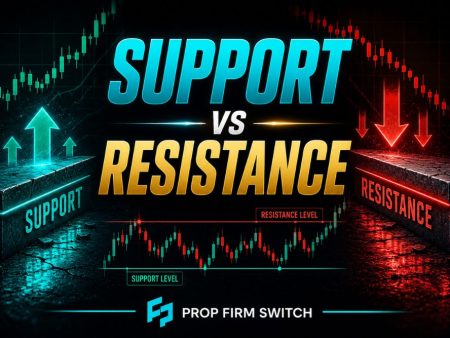
Support and resistance trading is a simple forex strategy that relies on identifying price levels where the market has historically reversed direction. These levels represent areas where buying or selling pressure has previously been strong enough to stop price movement.
How it works:
- Identify key support (where price tends to stop falling) and resistance (where price tends to stop rising) levels
- Enter buy trades near support levels when price shows signs of bouncing
- Enter sell trades near resistance levels when price shows signs of reversing
- Place stop-loss orders just beyond the support or resistance level
The forex technical analysis basics include support and resistance levels, trend lines, and key chart patterns. Mastering these concepts provides a foundation for all trading strategies.
3. Breakout Trading Strategy
Breakout trading involves entering the market when price moves beyond a defined support or resistance level with increased volume. This strategy aims to capture the momentum that often follows such breakouts.
How it works:
- Identify a clear range or pattern with well-defined boundaries
- Wait for price to break through the boundary with increased volume
- Enter in the direction of the breakout
- Place a stop-loss inside the previous range
Forex day trading strategies require more active management and screen time than longer-term approaches. Breakout trading can be particularly effective for day traders who can monitor charts during key market sessions.
4. Moving Average Crossover Strategy
The moving average crossover is one of the most popular beginner forex trading strategies due to its simplicity and clear signals. It uses two moving averages of different periods to identify potential trend changes.
How it works:
- Plot a faster moving average (e.g., 10-period) and a slower moving average (e.g., 50-period) on your chart
- Enter a buy trade when the faster MA crosses above the slower MA
- Enter a sell trade when the faster MA crosses below the slower MA
- Place stop-loss orders at recent swing points or using a fixed pip amount
When implementing beginner forex trading strategies, patience is often more important than frequent trading. The moving average crossover strategy helps enforce this discipline by providing relatively infrequent but higher-quality signals.
5. Price Action Trading
Price action trading focuses on analyzing the movement of price itself rather than relying on indicators. This approach teaches traders to read the “language” of the market directly from the charts.
How it works:
- Identify key chart patterns (pin bars, engulfing patterns, inside bars)
- Look for these patterns at important support/resistance levels or trend lines
- Enter trades based on the expected direction following the pattern
- Set stop-loss orders beyond the pattern’s high or low
Simple forex strategies that yield consistent results often focus on price action because it works across all timeframes and market conditions. Learning to read price action is a valuable skill that will serve you throughout your trading career.
How to Trade Forex for Beginners: Step-by-Step Approach
Learning how to trade forex for beginners starts with understanding currency pairs and their behavior. Here’s a structured approach to implementing the strategies we’ve discussed:
Step 1: Choose Your Strategy
Select one strategy that resonates with your trading style and time availability. Resist the urge to combine multiple strategies initially.
Step 2: Select Suitable Currency Pairs
The best currency pairs for beginner forex traders typically include major pairs like EUR/USD and GBP/USD. These pairs offer:
- Tighter spreads (lower trading costs)
- Higher liquidity (easier execution)
- More available analysis and resources
- Generally lower volatility
Step 3: Determine Your Trading Timeframe
Based on your availability and strategy, choose appropriate timeframes:
- Day trading: 15-minute to 1-hour charts
- Swing trading: 4-hour to daily charts
- Position trading: Daily to weekly charts
Guides on how to trade forex for beginners should emphasize risk management above potential profits. When exploring how to trade forex for beginners, focus first on mastering one strategy before moving to others.
Step 4: Practice on a Demo Account
Before risking real money, thoroughly test your chosen strategy on a demo account:
- Execute at least 20-30 trades following your strategy rules exactly
- Record all trades in a trading journal
- Calculate win rate, risk-reward ratio, and overall profitability
- Identify patterns in winning and losing trades
How to use forex demo account practice to test strategies effectively:
- Treat demo trading as seriously as real trading
- Follow your trading plan precisely
- Trade realistic position sizes
- Practice during the same hours you’ll trade live
Step 5: Implement Proper Risk Management
The most sustainable beginner forex trading strategies prioritize capital preservation over aggressive profits. Essential risk management rules include:
- Never risk more than 1-2% of your account on a single trade
- Always use stop-loss orders
- Aim for a minimum risk-reward ratio of 1:2 (risking 1 pip to potentially gain 2)
- Avoid trading during major news events initially
Essential Forex Risk Management Techniques to Protect Your Capital
Effective beginner forex trading strategies avoid complexity and focus on clear market signals, but even the best strategy will fail without proper risk management. Here are essential techniques to protect your capital:
Position Sizing
Calculate position size based on:
- Account size
- Risk percentage per trade (1-2% maximum)
- Stop-loss distance in pips
Formula: Position Size = (Account × Risk %) ÷ (Stop-Loss in Pips × Pip Value)
Stop-Loss Placement
Place stop-losses based on market structure, not arbitrary pip amounts:
- For trend trades: Below recent swing lows or above swing highs
- For range trades: Beyond the range boundary
- For breakout trades: Inside the previous consolidation
Take-Profit Targets
Set realistic profit targets using:
- Previous support/resistance levels
- Fibonacci extension levels
- Risk-reward ratios (minimum 1:2)
Risk-Reward Ratio
Successful forex day trading strategies incorporate strict risk-to-reward ratios on every position. Always aim for trades where the potential reward exceeds the potential risk by at least 2:1.
Top Forex Day Trading Strategies for New Market Entrants
Day trading involves opening and closing positions within the same trading day. The best forex day trading strategies for beginners typically use larger timeframes like the 4-hour chart to avoid noise and false signals.
1. Range Trading Strategy
Markets spend approximately 70% of the time in ranges rather than trends. Range trading capitalizes on this by:
- Identifying horizontal support and resistance levels
- Buying near support and selling near resistance
- Using oscillators like RSI or Stochastic to confirm overbought/oversold conditions
2. Breakout Momentum Strategy
This strategy targets the initial powerful move when price breaks out of a consolidation:
- Identify periods of low volatility (tight ranges or patterns)
- Wait for a decisive break beyond the range with increased volume
- Enter in the breakout direction with a tight stop-loss
- Take partial profits quickly and trail stops on remaining position
3. News Trading Strategy
While generally riskier for beginners, a structured approach to news trading can be effective:
- Identify high-impact economic releases using an economic calendar
- Observe (don’t trade) during the news release
- Wait for the initial volatility to subside (usually 15-30 minutes)
- Enter trades in the direction of the post-news trend
When selecting the best currency pairs for beginner forex traders, consider those with lower volatility and tighter spreads for day trading strategies.
5 Beginner Forex Trading Strategies with High Success Rates
Based on historical performance and ease of implementation, these five strategies have shown high success rates for beginners:
| Strategy | Best Timeframe | Typical Win Rate | Best Currency Pairs | Time Commitment |
|---|---|---|---|---|
| Trend Following | 4H, Daily | 55-60% | EUR/USD, GBP/USD | Low (1-2 checks daily) |
| Support & Resistance | 1H, 4H | 60-65% | EUR/USD, USD/JPY | Medium (3-5 checks daily) |
| Moving Average Crossover | 4H, Daily | 50-55% | Major pairs | Low (1-2 checks daily) |
| Breakout Trading | 15M, 1H, 4H | 45-50% | GBP/USD, EUR/JPY | Medium-High (frequent checks) |
| Price Action | Any | 60-65% | Any | Varies by approach |
Understanding forex technical analysis basics allows traders to make more informed entry and exit decisions with these strategies. The most reliable forex trading strategies often incorporate multiple timeframe analysis for confirmation.
Common Mistakes Beginners Should Avoid
Many resources on forex trading for beginners overlook the importance of psychological preparation. Here are critical mistakes to avoid:
- Overtrading: Trading too frequently leads to higher transaction costs and emotional fatigue. Quality over quantity is key.
- Neglecting Education: Successful trading requires continuous learning. Invest time in understanding market fundamentals.
- Inconsistent Strategy Application: Changing strategies frequently or not following rules consistently leads to poor results.
- Emotional Trading: Making decisions based on fear or greed rather than your trading plan.
- Improper Position Sizing: Risking too much on single trades can quickly deplete your account.
- Chasing the Market: Entering trades after the optimal entry point has passed.
- No Trading Journal: Failing to record and analyze your trades prevents improvement.
Forex Technical Analysis Basics Every New Trader Should Master
The forex technical analysis basics include support and resistance levels, trend lines, and key chart patterns. These fundamental concepts form the foundation of most trading strategies:
Key Technical Analysis Concepts
- Trend Analysis: Identifying the overall market direction using:
- Higher highs and higher lows (uptrend)
- Lower highs and lower lows (downtrend)
- Moving averages
- Trendlines
- Support and Resistance: Identifying price levels where the market has historically reversed.
- Chart Patterns: Recognizing forex chart patterns for beginners, such as:
- Head and shoulders
- Double tops and bottoms
- Triangles
- Flags and pennants
- Candlestick Patterns: Learning to read price action through candlestick formations:
- Doji
- Engulfing patterns
- Hammers and shooting stars
- Morning and evening stars
- Indicators and Oscillators: Using mathematical calculations to identify potential trade opportunities:
- Moving Averages
- RSI (Relative Strength Index)
- MACD (Moving Average Convergence Divergence)
- Stochastic Oscillator
The best forex indicators for beginners to use in their trading are those that provide clear signals with minimal complexity. Start with no more than 2-3 indicators to avoid analysis paralysis.
Resources for Further Learning
To continue developing your forex trading skills, consider these resources:
- Books for Beginners:
- “Trading in the Zone” by Mark Douglas
- “Japanese Candlestick Charting Techniques” by Steve Nison
- “Market Wizards” by Jack D. Schwager
- Online Courses:
- BabyPips.com’s School of Pipsology (free)
- Coursera and Udemy forex courses
- Trading platform educational resources
- Practice Tools:
- Demo accounts from reputable brokers
- Trading simulators
- Backtesting software
- Community Support:
- Trading forums like ForexFactory
- Reddit communities (r/Forex)
- Local trading groups
Your Next Steps in Forex Trading
The journey to becoming a successful forex trader takes time, discipline, and continuous learning. The forex strategies for beginners outlined in this guide provide a solid foundation, but consistent application and proper risk management are what ultimately lead to success.
Remember these key takeaways:
- Start with one simple strategy and master it before moving to others
- Practice extensively on a demo account before trading real money
- Prioritize risk management over profit potential
- Keep a detailed trading journal to track your progress
- Continue your education through books, courses, and market analysis
Effective forex trading strategies balance technical analysis with fundamental market understanding. By focusing on the right approach for your personality and schedule, you can develop a sustainable trading practice that grows your skills and potentially your account over time.
Begin by selecting one strategy from this guide, thoroughly testing it on a demo account, and gradually implementing it with small position sizes on a live account. With patience and discipline, you’ll be well on your way to forex trading success.