Day trading has become increasingly popular as global financial markets grow more accessible through advanced trading platforms, faster internet connectivity, and mobile trading applications. Industry reports indicate that daily participation from retail traders continues to rise, with many individuals seeking flexible income opportunities in fast-moving financial markets.
In 2026, day trading attracts beginners and experienced traders alike due to the potential to generate profits from short-term price movements. However, the reality is that consistent profitability requires structured education, disciplined execution, and strong risk management rather than relying on luck or impulsive decision-making.
Many new traders underestimate the importance of preparation, often entering the market without a clear strategy or trading plan. This guide explains how day trading works, the financial markets best suited for intraday trading, and the essential steps beginners should follow to build a solid trading foundation.
What Is Day Trading?
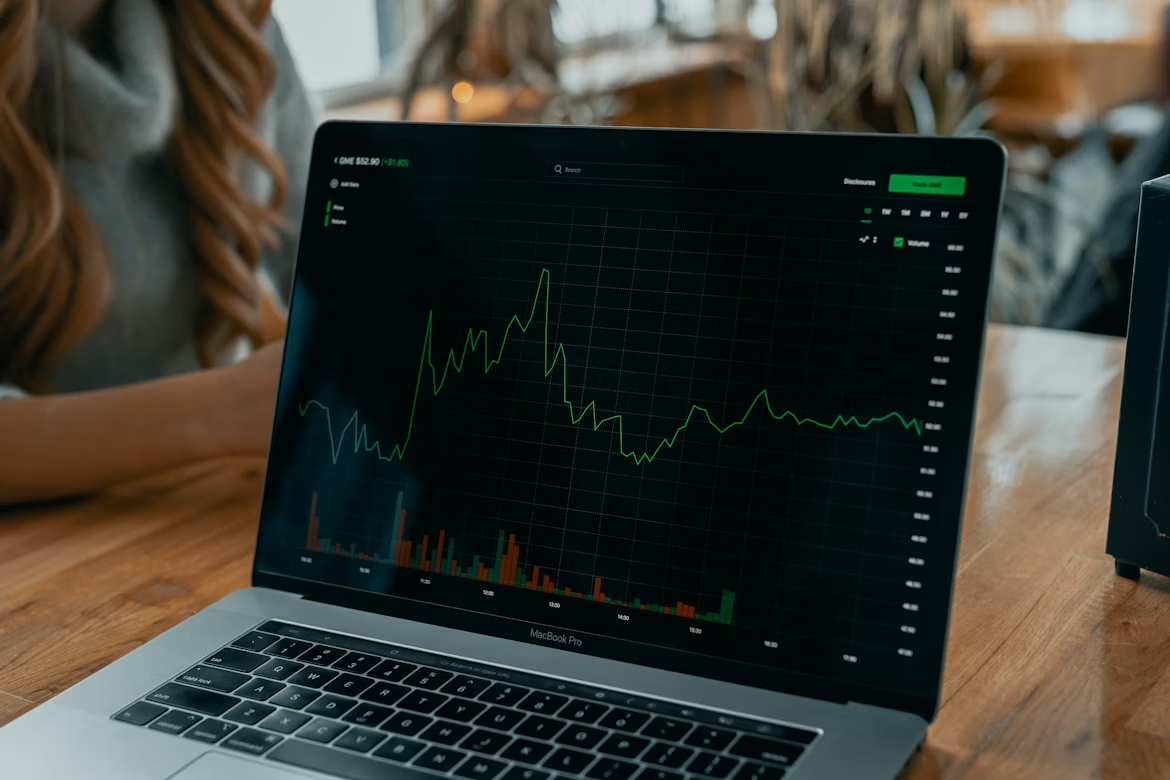
Day trading is a short-term trading method where traders open and close positions within the same trading session. The goal is to profit from intraday price fluctuations rather than holding trades overnight or for extended periods.
Unlike long-term investing, which focuses on fundamental growth and macroeconomic trends, day trading relies primarily on technical analysis, chart patterns, and market momentum. Trades may last from a few minutes to several hours, depending on volatility, liquidity, and the trader’s strategy.
Day traders typically focus on high-probability setups that occur during active market sessions. Because positions are closed before the market day ends, traders avoid overnight risks such as price gaps, unexpected economic news, or geopolitical events.
How Day Trading Works
Day trading works by capitalizing on short-term price movements that occur throughout the trading day. Traders analyze charts, monitor market sentiment, and use technical indicators to identify potential entry and exit points.
Intraday trading opportunities are often influenced by market liquidity, economic announcements, institutional order flow, and trading session overlaps. Successful day traders develop structured strategies that allow them to react quickly to changing market conditions while maintaining disciplined risk management.
Trade execution speed is also important, as delays can affect entry prices and overall profitability. Most day traders rely on predefined trading plans, including stop loss levels, profit targets, and position sizing rules to manage risk effectively.
Financial Markets Suitable for Day Traders
Day traders can choose from several financial markets, but the most suitable ones typically offer high liquidity, consistent volatility, and relatively low transaction costs. Selecting the right market depends on trading style, available capital, and platform accessibility.
Popular Markets for Day Trading
- Forex Market
- High daily trading volume and strong liquidity
- Tight spreads on major currency pairs
- Active 24-hour trading sessions
- Stock Market
- Intraday price movements driven by earnings reports and news
- Opportunities in large-cap and high-volume stocks
- Structured market hours that suit session-based trading
- Cryptocurrency Market
- High volatility creates frequent trading opportunities
- 24/7 market access
- Suitable for traders comfortable with rapid price fluctuations
- Futures and Index Markets
- Clear intraday trends and volatility patterns
- Popular among professional and institutional traders
- Efficient for strategy-based trading approaches
Choosing a market with sufficient liquidity and predictable volatility can help traders improve execution quality and overall trading consistency.
Step-by-Step Guide to Start Day Trading
Starting day trading requires more than just opening a trading account and placing trades. Successful traders follow a structured learning process that helps them develop skills, manage risk effectively, and build long-term consistency.
Below is a practical step-by-step guide to help beginners start day trading in a more disciplined and informed way.
Step 1 — Learn the Basics of Trading
Before risking real money, traders must understand how financial markets work and how price movements occur. Learning the fundamentals helps traders avoid common beginner mistakes and build confidence in executing trades.
Key concepts to study include:
- Reading price charts and candlestick patterns
- Understanding support and resistance levels
- Market structure and trend identification
- Basic technical indicators and trading terminology
- Risk management principles
Building a strong educational foundation allows traders to develop structured decision-making skills.
Step 2 — Choose a Financial Market to Trade
Day traders should focus on markets that match their trading style, available time, and risk tolerance. Each market offers different levels of volatility, liquidity, and trading opportunities.
Important factors to consider when choosing a market:
- Trading hours and session activity
- Average spreads and transaction costs
- Price volatility and momentum behavior
- Minimum capital requirements
- Platform availability and execution quality
Specializing in one market initially can help traders gain deeper market understanding.
Step 3 — Select a Reliable Trading Platform
A trading platform plays a crucial role in day trading performance. Execution speed, charting tools, and order management features can significantly impact trading efficiency.
Traders should look for platforms that offer:
- Fast and stable trade execution
- Advanced charting and technical analysis tools
- Risk management features such as stop loss and take profit
- Access to demo accounts for practice
- Real-time market data and economic calendar integration
Testing multiple platforms can help traders find one that suits their strategy.
Step 4 — Develop a Day Trading Strategy
A trading strategy provides clear rules for entering and exiting trades. Without a structured strategy, traders may rely on emotions or random decisions, which can lead to inconsistent results.
When developing a strategy, traders should focus on:
- Specific entry and exit criteria
- Timeframes used for analysis
- Risk-to-reward ratio targets
- Trade frequency and session timing
- Backtesting historical performance
A well-defined strategy helps traders maintain discipline during both winning and losing periods.
Step 5 — Practice Using a Demo Account
Demo trading allows beginners to practice strategies in real market conditions without risking capital. This stage is essential for developing execution skills and emotional control.
Benefits of demo trading include:
- Testing trading strategies risk-free
- Understanding platform functionality
- Improving trade timing and discipline
- Building confidence before live trading
Traders should aim to achieve consistent results on demo before transitioning to real accounts.
Step 6 — Start Trading with Small Capital
When transitioning to live trading, starting with small position sizes helps reduce psychological pressure and financial risk. Beginners should focus on consistency rather than large profits.
Smart practices for early-stage live trading include:
- Risking only a small percentage of capital per trade
- Avoiding excessive leverage
- Setting daily loss limits
- Keeping a detailed trading journal
- Gradually increasing trade size as performance improves
Building experience gradually allows traders to refine strategies and develop long-term sustainability.
Essential Day Trading Tools and Indicators
Day traders rely on various tools and indicators to analyze market conditions, identify trading opportunities, and manage risk effectively. Using the right combination of tools can improve decision-making and trade execution consistency.
Commonly Used Day Trading Tools
- Trading Platform with Advanced Charting
Enables technical analysis, order execution, and trade management in real time. - Moving Averages
Help identify short-term trends and dynamic support or resistance levels. - Relative Strength Index (RSI)
Measures market momentum and helps identify overbought or oversold conditions. - MACD (Moving Average Convergence Divergence)
Assists in spotting trend reversals and momentum shifts. - Volume Indicators
Provide insight into market participation and strength behind price movements. - Economic Calendar
Helps traders prepare for high-impact news events that can cause volatility. - Trading Journal Software
Allows traders to track performance, identify strengths and weaknesses, and improve strategy execution.
Using tools selectively and avoiding indicator overload can help traders maintain clarity and focus during fast-moving market conditions.
Best Strategies for Day Traders
Day traders use various strategies depending on market conditions, volatility levels, and personal trading styles. The most effective strategies typically focus on momentum, liquidity, and structured entry rules.
Popular Day Trading Strategies
- Trend Following Strategy
Trading in the direction of the dominant intraday trend using moving averages and market structure. - Breakout Strategy
Entering trades when price breaks key support or resistance levels with strong momentum. - Scalping Strategy
Executing multiple short-term trades to capture small price movements during active sessions. - Range Trading Strategy
Buying near support and selling near resistance during sideways market conditions. - News Trading Strategy
Taking advantage of increased volatility during major economic announcements.
Selecting a strategy that aligns with trading personality and market behavior can improve long-term consistency.
Risk Management Tips for Day Traders
Risk management is one of the most critical components of successful day trading. Even highly profitable strategies can fail without proper capital protection and disciplined trade execution.
Essential Risk Management Practices
- Use Proper Position Sizing
Risk only a small percentage of trading capital per trade to avoid significant losses. - Always Set Stop Loss Orders
Define exit points before entering trades to limit downside risk. - Maintain Favorable Risk-to-Reward Ratios
Aim for potential rewards that justify the risk taken on each trade. - Set Daily Loss Limits
Avoid emotional trading by stopping after reaching a predefined loss threshold. - Avoid Overleveraging
Excessive leverage can amplify both profits and losses. - Stay Emotionally Disciplined
Avoid revenge trading, impulsive entries, and fear-driven exits.
Consistent risk management allows traders to survive losing streaks and remain active in the market.
Day Trading Pros and Cons
Day trading offers both opportunities and challenges that traders must carefully consider before committing to this fast-paced trading approach. Understanding the advantages and potential drawbacks can help beginners set realistic expectations and prepare for the demands of intraday trading.
| Pros | Cons |
| No overnight exposure to market risk | High psychological pressure |
| Frequent trading opportunities | Requires significant screen time |
| Potential for consistent short-term income | Transaction costs can accumulate |
| Flexibility to trade different financial markets | Rapid losses possible without discipline |
| Ability to compound gains through active trading | Steep learning curve for beginners |
While day trading can provide flexibility and income potential, it also requires strong discipline, emotional control, and a structured trading plan. Traders who approach day trading with proper preparation and risk management are more likely to handle its challenges effectively.
Conclusion
Day trading offers significant opportunities for traders who are willing to invest time in learning market behavior, developing structured strategies, and maintaining disciplined risk management. In 2026, increased market accessibility and technological advancements continue to attract new participants seeking flexible trading opportunities.
However, success in day trading does not come from quick profits or impulsive decisions. Traders who focus on education, practice consistently, and refine their strategies over time are more likely to achieve sustainable long-term performance.
By starting with small capital, choosing the right market and strategy, and prioritizing risk control, beginners can gradually build confidence and improve their chances of becoming consistent day traders.