Financial markets can move faster in 60 seconds than they do in an entire trading day.
When major economic announcements are released such as inflation data, employment reports, or interest rate decisions, price can surge or collapse within seconds. For example, the U.S. Non-Farm Payrolls (NFP) report often causes major forex pairs to move 50–150 pips in minutes. Central bank rate decisions can push stock indices up or down by 1–3% in a single session.
Billions of dollars are repositioned during these moments.
This explosive volatility is what attracts traders to news trading, a strategy focused on profiting from rapid price movements triggered by economic or political events.
But while the profit potential can be significant, the risks are equally high.
In this guide, we’ll break down:
- What news trading really is
- Who news traders are
- What types of news move markets
- Common strategies and tools
- And how news trading actually generates profits
What Is News Trading?
News trading is a strategy that involves entering trades before, during, or shortly after major economic announcements or unexpected breaking events. It is based on the principle that financial markets react sharply when new information alters expectations about the future. Because asset prices reflect anticipated economic conditions, any data release that significantly deviates from forecasts can trigger rapid repricing.
When new figures such as inflation data, employment reports, or interest rate decisions are published, institutions and traders quickly reassess valuations. This often leads to sudden volatility across forex pairs, stock indices, commodities like gold and oil, cryptocurrencies, and individual equities during earnings season.
At its core, news trading revolves around capturing volatility. Traders seek to profit from the swift price expansion that occurs when markets adjust to fresh information. The opportunity lies not merely in the news itself, but in how that news shifts expectations relative to what was previously priced in.
What Is a News Trader?
A news trader is a market participant who specializes in trading around high-impact economic or geopolitical events.
Unlike purely technical traders who rely mainly on chart patterns and indicators, news traders focus on macroeconomic data, central bank policy decisions, market sentiment, and broader economic trends to anticipate or react to volatility.
There are generally two types of news traders:
1. Discretionary News Traders
These traders manually interpret economic data and market reactions. They assess whether the data is better or worse than expected and make rapid decisions.
2. Algorithmic News Traders
Some traders use automated systems that execute trades within milliseconds of a news release. These systems are designed to detect deviations from forecasts and act instantly
To succeed in this environment, a news trader must combine fast execution with disciplined risk management. Emotional control is essential, as volatility can escalate quickly and unpredictably.
A solid understanding of macroeconomics and the ability to operate effectively under pressure are equally important. News trading rewards decisiveness and preparation, but it leaves little room for hesitation.
What Types of News Move the Markets?
Not all news events trigger significant price movement. Financial markets respond most aggressively to high-impact announcements that influence economic outlook, monetary policy, or investor expectations.
Volatility typically increases when new information significantly deviates from forecasts, forcing institutions and traders to rapidly adjust their positions.
Economic Data
Macroeconomic reports are among the most powerful drivers of short-term market volatility. These scheduled releases provide insight into a country’s economic health and often determine future monetary policy decisions.
Some of the most market-moving reports include:
- Non-Farm Payrolls (NFP)
Measures the number of jobs added or lost in the U.S. economy excluding the farming sector. Released monthly, it is one of the most influential indicators of labor market strength. - Consumer Price Index (CPI)
Tracks changes in the price of goods and services over time, serving as a primary measure of inflation. - Gross Domestic Product (GDP)
Represents the total value of goods and services produced within a country over a specific period. It is the broadest measure of economic performance. - Retail Sales
Measures the total value of goods sold at the retail level and serves as a key indicator of consumer spending. - Unemployment Rate
Shows the percentage of the labor force actively seeking work but unable to find employment. Rising unemployment can signal economic weakness, while declining unemployment often supports stronger currency and equity performance.
When actual data differs significantly from forecasts, volatility increases.
Central Bank Announcements
Central banks play a critical role in shaping financial market conditions through interest rate decisions and policy guidance. Because monetary policy directly affects borrowing costs, inflation, and economic growth, even subtle shifts in tone can trigger sharp price movements.
Key institutions that frequently move global markets include:
- Federal Reserve
The central bank of the United States. It sets interest rates and controls monetary policy for the world’s largest economy. Because the U.S. dollar underpins global finance, Federal Reserve decisions often impact nearly every major asset class. - European Central Bank
Responsible for monetary policy across the Eurozone. ECB interest rate decisions and policy guidance heavily influence the euro, European bonds, and global risk sentiment. - Bank of England
The United Kingdom’s central bank. Its rate decisions and economic outlook statements significantly affect the British pound and UK financial markets.
Political & Geopolitical Events
Financial markets are highly sensitive to uncertainty. Unexpected political and geopolitical developments can rapidly shift investor sentiment, capital flows, and risk appetite.
High-impact events include:
- Elections
National elections can alter fiscal policy, taxation, trade agreements, and regulatory environments. - Wars
Armed conflicts can disrupt global supply chains, energy markets, and trade routes. Commodities such as oil and gold often experience heightened volatility during periods of geopolitical tension. - Trade disputes
Tariffs, trade restrictions, and diplomatic conflicts between major economies can directly impact currency values, equity markets, and multinational corporations. - Sanctions
Economic sanctions imposed on countries or corporations can restrict access to global markets, influence commodity prices, and create sudden capital outflows. - Policy reforms
Major shifts in fiscal policy, taxation, regulation, or government spending can materially change business conditions and investor expectations.
These events create uncertainty, and markets dislike uncertainty. Volatility spikes as traders reposition.
Corporate News (Stocks)
For equity traders, corporate announcements are among the most powerful catalysts for short-term price movement.
During earnings season, individual stocks can move 5–20% (or more) within a single session.
Market-moving corporate events include:
- Earnings reports
Quarterly financial results reveal profitability, revenue growth, and operational performance. Stocks often react strongly if results differ meaningfully from analyst expectations. - Revenue surprises
Even if a company is profitable, revenue that significantly exceeds or misses forecasts can trigger sharp repricing as investors reassess future growth potential. - Mergers & acquisitions
Acquisition announcements, buyouts, or merger negotiations can cause immediate volatility in both the acquiring and target companies. - Forward guidance revisions
When companies adjust their future outlook, whether upgrading or downgrading expectations markets often respond aggressively
Again, the key factor is expectation versus reality.
Buy the Rumour, Sell the News
One of the most well-known dynamics in financial markets is the principle:
This phenomenon occurs when markets rise in anticipation of positive news, only to decline once the announcement is officially released, even if the news itself is favorable.
Why Does This Happen?
Financial markets are forward-looking. Prices reflect expectations about the future, not just current conditions.
When traders widely expect a positive outcome, institutions often position themselves before the announcement.
By the time the news is released, much of the move may already be priced in.
Example Scenario
Consider a widely anticipated interest rate hike:
- Traders expect the central bank to raise rates.
- Investors begin buying the currency ahead of the decision.
- The market rallies in anticipation.
- The rate hike is officially announced.
- Large institutional players begin taking profits.
- With fewer new buyers entering at higher prices, the market reverses.
The actual announcement removes uncertainty. Once uncertainty disappears, so does the speculative premium that drove the rally.
Common News Trading Strategies
News trading can be approached in several ways depending on a trader’s risk tolerance, execution speed, and experience level. Below are four of the most commonly used strategies.
1. Breakout Strategy
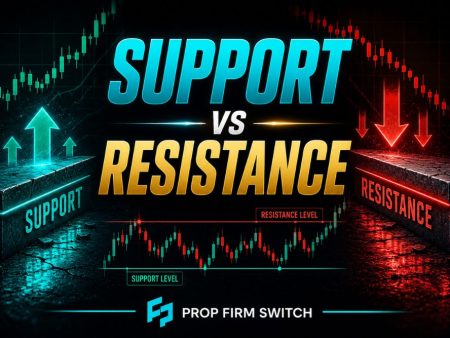
The breakout strategy involves entering a trade immediately after a news release when price breaks above or below a key level (such as support, resistance, or consolidation range). The goal is to capture the initial surge in momentum caused by the announcement.
This strategy relies heavily on volatility expansion and rapid execution.
| Pros | Cons |
| Captures strong initial momentum | High risk of false breakouts |
| Potential for large moves in short time | Significant slippage during fast markets |
| Simple to execute conceptually | Spreads often widen during release |
| Works well during high-impact events | Emotionally intense due to speed |
2. Straddle Strategy
The straddle strategy involves placing two pending orders before the news release:
- A buy stop above the current price
- A sell stop below the current price
When the news hits, whichever order is triggered first captures the breakout move. The opposite order is typically canceled.
This strategy removes the need to predict direction.
| Pros | Cons |
| No need to predict market direction | Severe slippage can occur |
| Can capture explosive moves instantly | Both orders may trigger in whipsaw conditions |
| Structured and rule-based | Spread widening reduces precision |
| Popular among short-term traders | Broker execution quality matters greatly |
3. Fade Strategy (Advanced)
The fade strategy involves trading against the initial spike following a news release. Instead of chasing the breakout, the trader waits for signs of exhaustion or overreaction and enters in the opposite direction.
This approach is based on the idea that markets often overshoot in the first moments of volatility.
| Pros | Cons |
| Avoids entering during chaotic first seconds | Requires strong experience and timing |
| Can provide excellent risk-to-reward setups | High probability of being early |
| Capitalizes on overreactions | Dangerous if momentum continues strongly |
| Less affected by initial slippage | Emotionally difficult to execute |
4. Post-News Pullback Strategy
The post-news pullback strategy is a more conservative approach. Instead of trading immediately, the trader waits for:
- Initial volatility to settle
- A clear directional bias to form
- A pullback toward structure or support/resistance
The trade is entered in the direction of the dominant move after confirmation.
This method prioritizes confirmation over speed.
| Pros | Cons |
| Reduced exposure to initial slippage | May miss the largest portion of the move |
| More structured and controlled entries | Requires patience and discipline |
| Better suited for traders with drawdown limits | Fewer trade opportunities |
| Lower emotional pressure | Continuation is not guaranteed |
Tools Used in News Trading
Successful news trading depends on preparation, timing, and execution speed. Professional traders rely on specialized tools to stay ahead of scheduled events and react efficiently when volatility spikes..
Common tools include:
- Economic calendars
Economic calendars list upcoming data releases, forecasts, and previous results. They allow traders to prepare in advance and identify high-impact announcements that may cause volatility. - Central bank schedules
Official central bank websites publish meeting dates, policy decisions, and press conference schedules. Monitoring these events helps traders anticipate major shifts in monetary policy.
- Real-time news feeds
Live news services provide immediate updates during breaking events. Fast access to headlines is critical because markets often react within seconds of a release.
- Fast execution trading platforms
Low-latency platforms reduce execution delays during volatile conditions. In news trading, even milliseconds can affect entry price and slippage.
- Virtual Private Server (VPS)
Automated traders use VPS hosting to ensure stable and uninterrupted execution. This reduces the risk of connection issues during high-impact events.
- Volatility indicators like ATR (Average True Range)
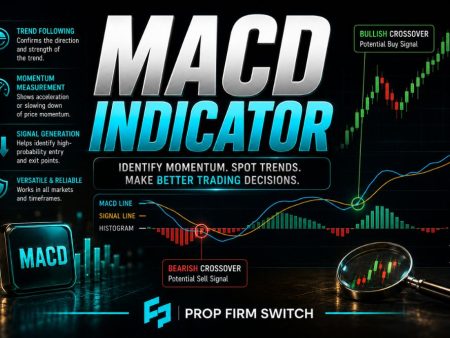
Indicators like the Average True Range (ATR) help traders measure current volatility levels and adjust stop-loss and position sizing accordingly.
- Depth of Market (DOM) tools
DOM tools display real-time buy and sell orders at different price levels. They provide insight into liquidity conditions, which can change rapidly during news releases.
Preparation is everything. Entering blindly during high-impact news is gambling.
Tips and Best Practices
News trading can be profitable, but without strict discipline, it can quickly lead to losses. The following best practices help manage risk and improve consistency.
- Never overleverage during high-impact events
Volatility expands rapidly during major announcements. High leverage combined with fast price swings can trigger stop-outs within seconds. - Expect spread widening
Brokers often widen spreads during news releases due to reduced liquidity. Wider spreads increase entry costs and can distort risk-to-reward ratios. - Be prepared for slippage
Orders may be filled at a different price than requested, especially during explosive moves. Always factor slippage into your risk calculations. - Avoid trading every single news event
Not all announcements are equal. Focus only on high-impact releases that historically generate strong volatility. - Focus on high-impact releases only
Events like inflation reports, employment data, and interest rate decisions typically create the most significant price movement. - Backtest your strategy
Review historical news events and test how your strategy would have performed. Data-driven preparation builds confidence and consistency. - Always define your maximum risk
Before entering a trade, determine how much you are willing to lose. Clear risk parameters protect long-term capital. - Avoid revenge trading after a bad fill
A bad fill or unexpected slippage can trigger emotional decisions. Maintaining discipline after losses is critical for long-term success.
For traders in prop firm challenges, strict daily drawdown limits make news trading even riskier.
How News Trading Generates Profits
So how does news trading actually generate profits?
At its core, news trading is driven by volatility and market repricing.
When new economic or political information enters the market, expectations shift instantly. Institutional investors adjust positions, liquidity conditions change, and price can expand rapidly as supply and demand rebalance.
In the first moments after a major release, several forces often interact at once:
- Institutions reposition large capital allocations.
- Short-term traders react to the headline.
- Algorithmic systems execute high-speed orders.
This combination can produce sharp, fast price movements creating opportunities for traders who are positioned correctly.
However, volatility alone does not guarantee profit.
Successful news trading depends on:
- Preparation before the event
- Strict risk control
- Precise timing
- Emotional discipline
In news trading, the difference between profit and account damage is rarely the headline itself, it is how the trader manages risk during the reaction.
Conclusion
News trading is one of the most exciting and potentially dangerous strategies in financial markets. It offers rapid price movements, heightened volatility, shorter holding periods, and the possibility of significant returns within minutes.
At the same time, those very conditions introduce serious risks, including slippage, spread widening, emotional pressure, and sudden drawdowns. Because of this, news trading is not suitable for everyone.
Traders who succeed approach it as a structured, rule-based strategy rather than a gamble. They prepare ahead of major releases, define their risk clearly, and understand that not every announcement needs to be traded.
When executed with discipline and planning, news trading can be a powerful tool. When approached recklessly, it can erase gains just as quickly as it creates them. Ultimately, the difference lies in preparation, risk management, and emotional control.