Many traders spend most of their time looking for profitable setups but pay far less attention to protecting their downside. That imbalance becomes expensive quickly in leveraged markets like futures and crypto, where one uncontrolled trade can wipe out days or even weeks of progress. Leveraged trading products regularly show that around 70% to 85% of retail traders lose money, and poor risk management remains one of the biggest reasons why.
A stop loss is one of the simplest tools traders use to control risk before emotions take over. It helps limit losses automatically when the market moves against a position. Traders may not avoid every losing trade, but managing downside properly often makes the difference between surviving long term and blowing up an account early.
Keep reading to learn how stop losses work and where to place them can help traders build stronger habits from the beginning.

What Is a Stop Loss in Trading?
A stop loss is an order placed to automatically close a trade once price reaches a certain level. Traders use it to limit potential losses if the market moves against their position.
For example, if a trader buys Bitcoin at $100,000 and places a stop loss at $98,000, the trade will automatically close if price falls to that level. Instead of holding the position and hoping the market reverses, the trader accepts a predefined loss and protects the remaining capital.
Stop losses are widely used in futures, forex, stocks, and crypto trading because markets can move unpredictably, especially during high volatility. Without a stop loss, traders often hold losing trades too long, which can create much larger drawdowns.
It is also important to understand that stop losses do not always guarantee perfect exits. During major news events or sudden volatility spikes, price may move so quickly that execution happens slightly beyond the stop level. This is commonly called slippage.
Types of Stop Loss Orders
Different stop loss methods work better under different market conditions. Traders often choose stop placement based on volatility, strategy, and trading style.
1) Fixed Stop Loss
A fixed stop loss is placed at a predetermined price level and does not move unless the trader adjusts it manually. This is one of the most common approaches beginners use because it is simple and easy to manage.
For example, a trader may decide to risk 50 points on a Nasdaq futures trade regardless of market conditions. Fixed stops work best when traders already know where their trade idea becomes invalid.
2) Trailing Stop Loss
A trailing stop loss moves with price as the trade becomes profitable. Instead of staying fixed, the stop gradually locks in gains while allowing the position to continue running.
This method is commonly used during strong trends. If Bitcoin rises steadily after entry, the trailing stop can follow price upward and help protect profits if the market suddenly reverses.
Trailing stops can be useful in trending markets, but placing them too tightly may cause trades to close prematurely during normal pullbacks.
3) Percentage-Based Stop Loss
A percentage-based stop loss is based on a fixed percentage of account risk rather than a specific chart level. Many traders use this method to maintain consistent risk management across different trades.
For example, a trader with a $10,000 account may choose to risk only 1% per trade, or $100. The stop loss and position size are then adjusted to keep total risk within that amount.
4) Volatility-Based Stop Loss
A volatility-based stop loss adjusts according to market conditions instead of using a fixed distance. Many traders use indicators like Average True Range (ATR) to measure how much a market typically moves.
Markets with high volatility usually require wider stops because price fluctuations are larger. Tight stops during volatile conditions often lead to unnecessary exits even when the overall trade idea remains valid.
How to Place a Stop Loss Properly
A stop loss should not be placed randomly. Good stop placement usually comes from understanding market structure, volatility, and overall trade risk.
1) Use Support and Resistance Levels
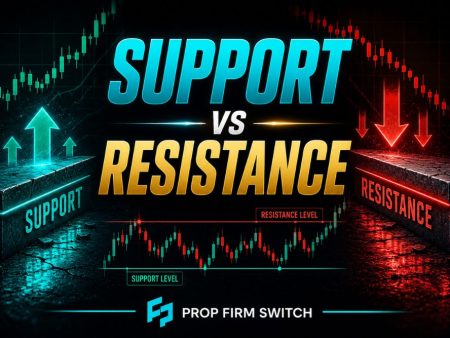
Many traders place stop losses beyond key support or resistance areas. If price breaks those levels, the original trade idea may no longer make sense.
For example, a trader buying near support may place the stop slightly below that level instead of placing it too close to current price action.
2) Consider Market Volatility
Markets do not move the same way every day. Nasdaq futures may move aggressively during major news releases, while Treasury futures may remain calmer. Stops that are too tight often get triggered by normal volatility. Giving trades enough room to breathe can help reduce unnecessary exits.
3) Avoid Extremely Tight Stops
Many beginners place stops too close because they want smaller losses. The problem is that markets naturally fluctuate, and tight stops can close trades before the move develops properly.
4) Match Stop Size With Position Size
A wider stop loss should usually mean a smaller position size. This helps maintain consistent risk even when market conditions change.
Professional traders often adjust size first instead of forcing the same position size into every setup.
5) Think About Risk-to-Reward Ratio
Many traders evaluate whether the potential reward justifies the risk before entering a trade. A setup risking $100 to potentially make $300 offers a 1:3 risk-to-reward ratio.
This does not guarantee success, but it helps traders avoid taking low-quality setups where downside outweighs upside potential.
How To Calculate Stop Loss
Instead of guessing position size or hoping the market reverses, traders use basic formulas to control downside exposure more consistently.
A common way to calculate stop loss risk is:
Y – X = cents / ticks / pips at risk
Where:
- Y = entry price
- X = stop loss price
This formula shows the total distance between entry and stop loss.
After finding the risk distance, traders can estimate total dollar risk using:
Pips at risk × pip value × position size
This helps traders understand how much money can be lost if the stop loss is triggered.
Example 1: Forex Trade
A trader enters EUR/USD at 1.1050 and places a stop loss at 1.1000.
- 1.1050 − 1.1000 = 50 pips at risk
If the pip value is $1 per pip and the trader uses 1 mini lot, the calculation becomes:
- 50 × $1 × 1 = $50 total risk
This means the maximum loss for the trade would be around $50 if the stop loss is hit.
Example 2: Futures Trade
A trader buys Micro Nasdaq futures at 20,000 and places a stop loss at 19,980.
- 20 points at risk
If each point in MNQ equals $2, the calculation becomes:
- 20 × $2 × 1 contract = $40 total risk
This allows the trader to control position size before entering the trade instead of reacting emotionally afterward.
| Market | Entry Price | Stop Loss | Risk Distance | Estimated Risk |
| EUR/USD | 1.1050 | 1.1000 | 50 pips | $50 |
| MNQ | 20,000 | 19,980 | 20 points | $40 |
Protect the Downside First
Most traders spend too much time searching for winning setups while giving very little attention to risk control. The problem is that one poorly managed trade can erase weeks of progress, especially in fast-moving markets like futures and crypto. Stop losses help traders define risk before emotions start affecting decisions.
Losing trades will always be part of trading, even for experienced professionals. The goal is not to avoid losses completely but to keep them controlled enough that they do not damage long-term consistency. Traders who survive usually focus less on chasing massive profits and more on protecting capital during difficult periods.